For anyone who studies hard… and forgets everything anyway
The Reason You Forget 80% of What You Learn Has Nothing to Do With Your Memory
It's a method problem — and once you fix it with the simple 4-stage FAST System, you can learn any skill, language, or subject in a fraction of the time… without studying a single extra hour.
Keep reading if you want to:
Understand new material faster — and still remember it weeks and months later
Feel confident every time you sit down to learn, knowing your effort will actually stick
Own a repeatable system you can aim at any skill, language, exam, or career move
Retain more from every hour of study — without studying more or working harder
Get ahead of everyone else by mastering the one skill school never taught you
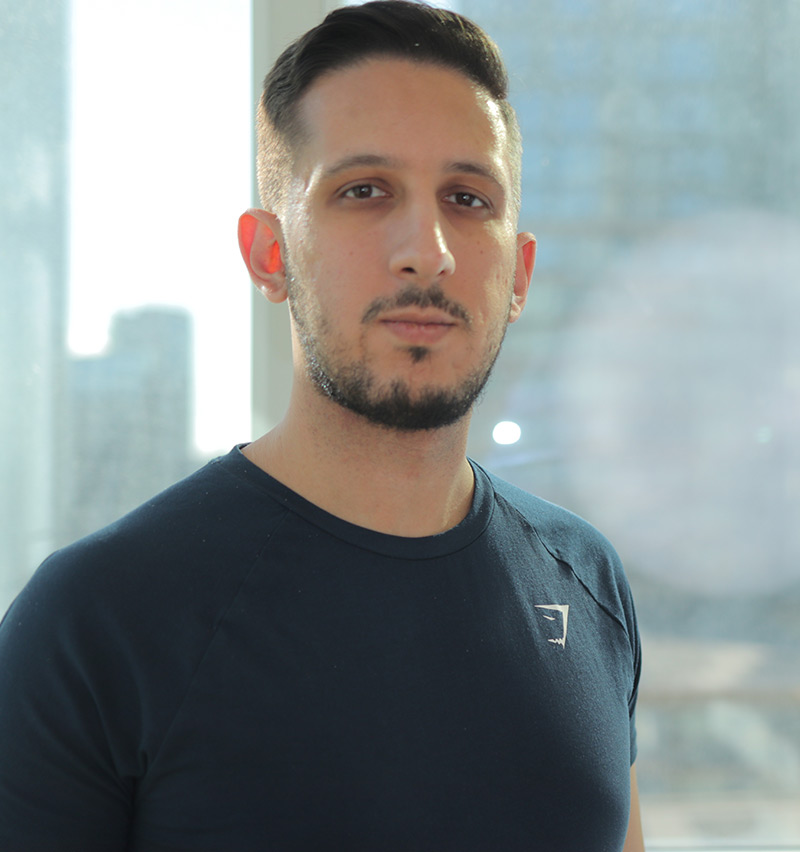
From: Nassim Zaidi
Author & founder of Mindlifting
Toronto, Canada
Dear friend,
If you love learning new things, you already know this:
Remembering what you learn is everything.
Now more than ever.
To put it simply: no retention = no transformation.
And yet… here's what happens to almost everyone:
You spend weeks learning something. Real hours. Real effort.
A language before a trip. A software tool for your job. A course your employer paid for. Material for an exam or certification.
You feel like you're making progress…
And a month later, most of it is simply gone.
You can sense that you once knew it. But when you actually need it — in the meeting, in the conversation, on the test — you can't retrieve it.
I know exactly how that feels — because I lived it.
When I first got into personal development, I was obsessed. More excited than I had ever been about anything in my life. I believed that if I just consumed enough — enough books, enough courses, enough hours — I'd automatically become smarter and more capable.
So I bought the books. I read them all. I took notes. I underlined. I highlighted.
Then one day, I decided to test what I actually remembered. I picked up a book I had finished just a few weeks earlier…
And I couldn't recall a single useful idea.
Months of effort — evaporated. That's when I faced the choice you're facing right now:
Option #1: keep learning and forgetting, hoping something eventually sticks.
Option #2: figure out how learning actually works — and never waste another hour again.
If you're like me, you know option #1 was never an option. So I spent years digging into memory, focus, and the science of learning — testing everything on myself. And what I found changed everything… because the problem was never what I thought it was.
Meanwhile, most people never make that discovery. So they tell themselves the story almost everyone tells themselves:
"I'm just not good at this stuff."
"Not a numbers person." "Bad with languages." "Too old to pick up new things."
Here's the truth nobody told you:
It was never your brain. It was your method.
And your method isn't even your fault — because you never chose it. It was handed to you by a system that got it completely backwards.
School Taught You What to Learn.
It Never Taught You How.
Think back. Twelve-plus years of school. Dates, formulas, grammar rules, the parts of a cell. Mountains of content.
Now answer honestly: how many hours were spent teaching you how to learn? How to take in new material efficiently. How to make it stick. How to turn it into something you could actually do?
For almost everyone, the answer is close to zero.
So you did what everyone does. You cobbled together a few habits and assumed that's just what learning feels like:
Reread the chapter
Highlight the important parts
Cram the night before
Watch it again and hope it sticks
Here's the brutal part: decades of research on how people actually learn keep reaching the same conclusion — these are among the least effective study methods that exist.
They feel productive because the material becomes familiar. But familiarity is an illusion. Familiarity is what you feel when you recognize something. Knowing is what you can produce when the page is closed.
You've been pouring enormous effort through a leaky container — and blaming yourself for the puddle on the floor.
And In Today's World, Slow Learning Is More Expensive Than Ever
Industries shift. Tools get replaced overnight. The knowledge that made you valuable five years ago slowly stops being enough.
The people who thrive aren't the ones who happened to learn the right thing once.
They're the ones who can learn the next thing — and the one after that — on demand.
Learning how to learn isn't one skill among many. It's the master skill that protects every other skill you have. And every month you spend learning the slow way is a month your competition doesn't have to.
The good news
Learning Is a Skill.
And Fast Learners Are Made, Not Born.
Picture two people learning guitar. Same start date. Same instrument. Same thirty minutes a day.
Six weeks later, one is playing clean chord changes through three songs. The other is still fumbling — quietly concluding they "just aren't musical."
Talent? No. When you strip it down, the fast learner simply did four things differently:
They aimed at the right targets. They engaged with the material instead of skimming past it. They tested themselves instead of rereading. And they got their hands dirty using the skill early.
Strip those habits away, and their "gift" disappears. Hand those habits to you, and the advantage becomes yours.
F — FRAME
Aim before you fire
Define a razor-sharp target and identify the "vital few" — the small fraction of the material that delivers most of the result. A few minutes of framing can redirect a hundred hours of effort.
A — ABSORB
Understand it once, for good
Take material in for real understanding instead of passive consumption — build the big picture first, connect new ideas to what you know, and explain it in plain words.
S — STRENGTHEN
Beat the forgetting curve
Use retrieval and spaced practice — the two most reliable findings in learning science — to turn fragile, short-lived knowledge into memory that lasts for months and years.
T — TRANSFER
Turn knowledge into skill
Close the gap between knowing something in theory and doing it when it counts — by practicing in real conditions and putting the skill to work early.
Four stages. One loop. And each stage is a direct fix for one of the four predictable ways learning breaks down:
Studying without a clear target? Frame fixes that.
Consuming passively without understanding? Absorb fixes that.
Understanding briefly, then forgetting? Strengthen fixes that.
Knowing things you can't actually do? Transfer fixes that.
This is the "better container" you were never given — and it's only available in this book.
Introducing
How to Learn Anything Fast
The Simple System for Faster Understanding, Better Memory, and Real-World Application — the complete FAST Method, in one place, for the first time.
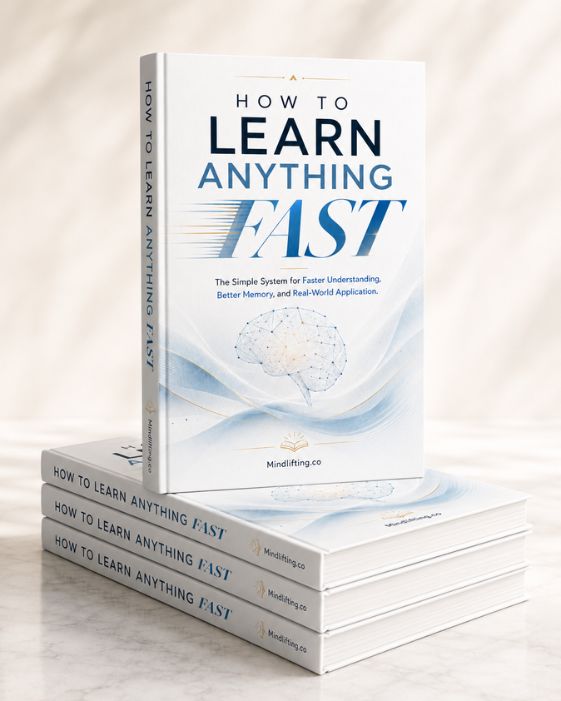
This book is drastically different from anything you've read before. It's not a pile of theory — it's a practical, step-by-step manual built on 201 pages of concrete tactics, with short action exercises at the end of each chapter that install the method as you read. And it's written in plain English anyone can follow.
Inside the 201 Pages of
How to Learn Anything Fast
This isn't a vague pep talk about "studying smarter." It's a concrete, step-by-step manual, built in three parts. Here's a taste of what you'll discover:
Part One
The Mindset of the Fast Learner
The "talent myth" that keeps you stuck — and the 3 real sources of learning speed you can copy starting today (Chapter 1)
A simple, non-technical model of how your brain actually builds and keeps knowledge — once you see it, every technique in the book feels obvious instead of strange (Chapter 2)
The 7 "productive-feeling" habits that quietly sabotage your learning — including the one nearly every student on earth relies on daily (Chapter 3)
Part Two
The FAST System — the heart of the book
How to turn a vague goal like "learn French" into a Target Statement sharp enough to actually hit — in about ten minutes (Chapter 4)
The "Vital Few" method: how to find the 20% of any subject that delivers 80% of the results — so you skip months of low-value grinding (Chapter 5)
Why rereading feels like learning when it mostly isn't — and the "retrieve, don't review" habit that can make one study session outperform three (Chapters 6–7)
How to beat the forgetting curve with a simple review schedule that takes minutes, not hours — so what you learn this month is still there next year (Chapter 8)
The exact way to convert knowledge into real-world skill — so you stop being the person who "read the book" and become the person who can do the thing (Chapter 9)
Part Three
Mastery in Action
Why the plateau is a lie — the predictable stage where most people quit right before their breakthrough, and how to punch through it (Chapter 10)
How to build a personal learning machine that runs without willpower — fifteen focused minutes a day beats a heroic weekend, and you'll see exactly why (Chapter 11)
Done-for-you FAST game plans for the most common goals: a new language, a software tool, an exam, an instrument, a career skill (Chapter 12)
Plus the Fast-Learning Toolkit appendix — a quick-reference arsenal you'll come back to for every new skill, for the rest of your life
Most chapters end with short actions that take just a few minutes — so by the time you finish the book, you won't just know the system. You'll already be using it.
This Isn't Theory.
It's How Memory Actually Works.
Every stage of the FAST System is built on the most reliable, most replicated findings in the science of learning:
The forgetting curve. Researchers who mapped how quickly we lose new information found a sobering pattern: without the right kind of review, much of what you learn fades within days. Your study session was real — but the memory was written in disappearing ink. FAST shows you the exact review rhythm that flattens the curve.
Retrieval practice. One of the most consistent findings in learning research: trying to remember something strengthens memory more than seeing it again does. Most people do the exact opposite — they reread and review. That single inversion is why so much study time produces so little.
Spaced repetition. A handful of well-timed, spaced reviews can do for your memory what dozens of cramming passes never will — in a fraction of the time.
You don't need to read a single research paper. The book translates all of it into plain English and simple actions — the kind you can apply tonight.
Meet the author
Nassim Zaidi is the founder of Mindlifting, where he teaches practical, science-backed methods for memory, focus, and skill acquisition. He's the author of several books on learning and memory, read by thousands of people who wanted a simpler, faster way to master new skills. How to Learn Anything Fast is the complete system, in one place, for the first time.
Get How to Learn Anything Fast
for Just $47
The complete 201-page book — instant access, read it on any device
The full 4-stage FAST System, explained step by step with concrete tactics
End-of-chapter action exercises that install the method as you read
Ready-made FAST game plans for languages, software, exams, instruments, and career skills
The Fast-Learning Toolkit appendix — your quick-reference guide for every future skill
Why only $47? Simple: I want to prove the impact of what I teach. This price doesn't reflect the book's true value — but it's the easiest way for you to get started. And if this book helps you (I believe it will), you'll know exactly who to turn to when you're ready for more. That's how I've built long-term relationships with thousands of readers and entrepreneurs around the world.
🔒 Secure 256-bit encrypted checkout · Instant access after payment
100% risk-free · No questions asked
The "Learn It or It's Free" Guarantee
Read the book. Run one skill — any skill — through the FAST System. If you don't understand faster, remember longer, and make more real progress than you ever did with your old way of studying, just send one email to [email protected] within 14 days and you'll get every penny back.
No forms. No questions. No hard feelings. You keep the book either way.
The entire risk is on me. The only way you can lose is by learning your next skill the slow way.
Two Versions of You,
Six Months From Now
Version one keeps learning the old way. Rereading. Highlighting. Watching. Forgetting. Starting the same skill for the third time. Quietly concluding, once again, that maybe they're just "not that kind of person."
Version two spent $47 and one weekend reading this book. They picked one skill they actually care about, ran it through Frame — Absorb — Strengthen — Transfer… and watched it stick for the first time in their life. Now every new skill goes faster than the last, because learning compounds.
Same brain. Same hours in the week. Different method.
The price of the book is $47. The price of another year of leaky learning is… well, you've already been paying it.
Questions? Answered.
I've read learning/productivity books before. How is this different?
Most books give you a pile of disconnected tips. This one gives you a single, repeatable system — FAST — where each of the four stages fixes one of the four specific ways learning breaks down. It's a method you run, not a list you forget. Fittingly, the book is also built so you retain it: short action exercises at the end of each chapter install the system as you read.
What if I'm "too old" or was never a good student?
Then this book was written specifically for you. Chapter 1 dismantles the talent myth piece by piece: for most learners, the bottleneck is the method, not the mind. The habits of fast learners are observable, teachable, and repeatable — at any age.
Do I need hours of free time to use the FAST System?
No — in most cases you'll spend fewer hours than you do now. The point isn't to grind harder; it's to stop wasting the effort you already give. Fifteen focused minutes a day, aimed correctly, beats a heroic weekend of cramming.
What exactly can I use this for?
Almost anything: a new language, a software tool or technical skill for work, an exam or certification, a musical instrument, a sport, a craft, public speaking. Chapter 12 includes ready-made game plans for the most common goals.
What if it doesn't work for me?
Then it's free. You're covered by a 14-day, no-questions-asked money-back guarantee. One email and you get a full refund — and you keep the book.
You Picked Up Your Phone Today and Found This Page for a Reason.
Something in your life is worth learning. A language. A skill. A career move. A thing you've started three times and abandoned three times — not because you couldn't learn it, but because the way you learned it last time was so inefficient the whole idea now feels exhausting.
That ends today, for less than the price of a pizza.
One last thing: this really is a limited-time offer. I can't promise the $47 price will still be here if you come back tomorrow — so grab your copy while it's still available.
Thank you for taking the time to read this page — and I truly hope this book changes the way you learn, for the rest of your life.
To your success,
Nassim Zaidi
P.S. — If you're one of those people who scroll straight to the bottom of a page (I do it too), here's the short version 👇
✅ By ordering today, you get How to Learn Anything Fast for $47 — the complete 4-stage FAST System to understand faster, remember longer, and turn knowledge into real-world skill.
🧠 The one belief this whole page comes down to: your brain was never the problem. Your method was. This book replaces it in 201 plain-English pages.
P.P.S. — Learning compounds. The first skill you run through FAST goes faster than your old way. The second goes faster than the first. Every month you wait is a month of compounding you never get back.
✅ And of course, if within 14 days you feel the book didn't help you, one email gets you a full refund — no questions asked.