
How to Improve Focus: The Complete Guide to Training Your Attention
If your attention span feels shorter than ever, you are definitely not alone. Between buzzing phones, endless tabs, and constant notifications, staying focused can feel like a superpower. The good news? Focus is not just something you either have or you do not. It is a skill you can train, strengthen, and Improve Focus over time with the right habits and tools.
Why Focus Feels So Hard Right Now
Let us start with some reassurance: there is nothing “wrong” with you because you struggle to concentrate. Modern life is basically designed to pull your attention in a hundred directions at once. Apps are built to keep you scrolling, work messages follow you home, and even your to‑do list can feel like it is shouting at you from the corner of your desk.
Your brain is wired to notice new things—every ping, pop‑up, and flashing icon feels important. Over time, this “always on” environment trains your attention to jump instead of stay. The result? You feel scattered, tired, and guilty for not getting enough done, even when you are busy all day. Learning how to Improve Focus is really about gently retraining your brain to do what it does best: pay attention to what matters, one thing at a time.
Step 1: Get Clear on What You Want to Focus On
You cannot Improve Focus if you are not sure what you are focusing on in the first place. Vague intentions like “be productive” or “get things done” are hard for your brain to lock onto. Instead, give your attention a clear target so it knows exactly where to land.
Swap “work on my project” for “write the first 300 words of my report.”
Replace “study” with “review chapters 2 and 3 for 25 minutes.”
Change “clean the house” to “clear the kitchen counters and load the dishwasher.”
Before you start a task, take 30 seconds to define the next small step. When your goal is concrete and visible, your attention has something solid to hold onto, and it becomes much easier to stay with it instead of drifting away.
💡 Friendly tip: Write your next step on a sticky note and keep it in front of you. When your mind wanders, glance at the note to gently guide yourself back.
Step 2: Build a Focus‑Friendly Environment
Willpower alone is overrated. If your phone is flashing, your desk is buried under papers, and the TV is on in the background, even the most determined person will struggle to Improve Focus. Instead of fighting your environment, redesign it to make focus the easiest option, not the hardest one.
Declutter your immediate workspace. You do not need a picture‑perfect desk, but clearing away obvious distractions—yesterday’s mail, random gadgets, half‑finished projects—can help your brain feel calmer and less pulled in different directions.
Tame your phone. Put it in another room, turn on Do Not Disturb, or use app blockers during your focus sessions. Out of sight truly is out of mind more often than we think.
Control sound. Some people focus best in silence, others with soft background noise. Try calm instrumental music, a neutral sound playlist, or a noise machine to see what helps you sink into your work.
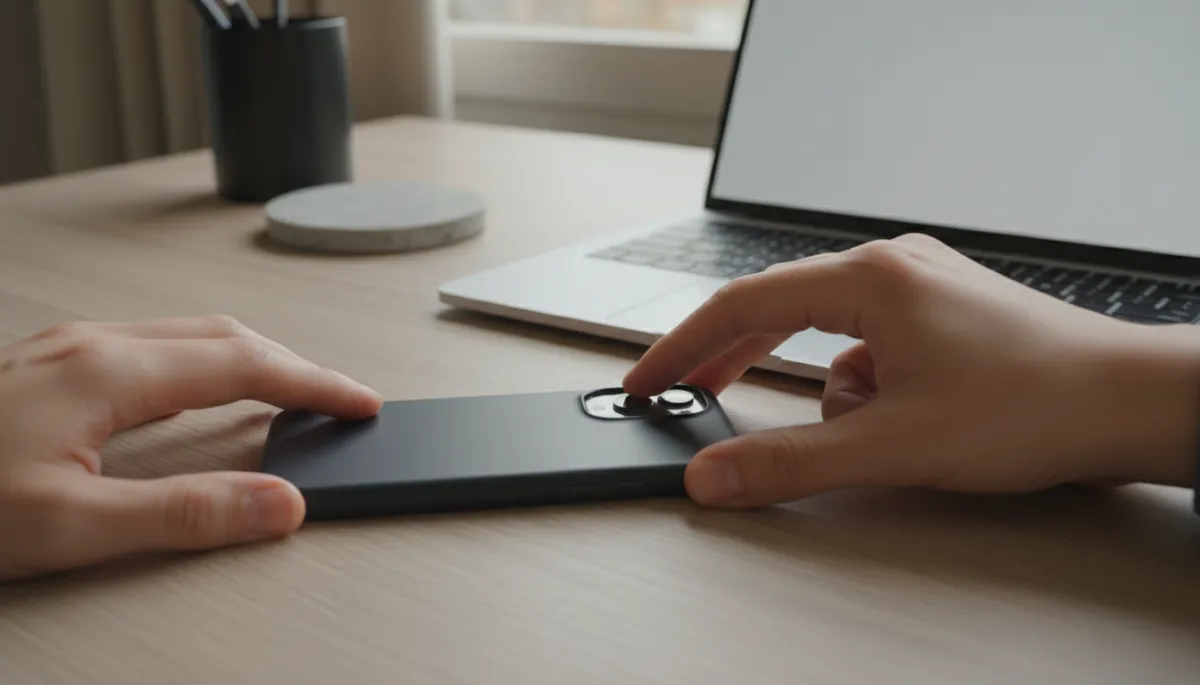
Small environmental tweaks, like putting your phone away, can dramatically improve focus.
Step 3: Train Your Brain with Short Focus Sessions
Just like you would not start weight training with the heaviest dumbbells, you do not need to force yourself into three hours of intense concentration on day one. To Improve Focus, think in terms of gentle training sessions that gradually get longer as your “attention muscles” grow stronger.
Pick one clear task. Use the specific next step you wrote down earlier.
Set a short timer. Start with 10–20 minutes. Promise yourself you will only focus until the timer goes off—no pressure to do more.
Remove obvious distractions. Close extra tabs, put your phone away, and let anyone nearby know you are in “focus time” for a bit.
Work until the timer ends, then rest. Take a short break—stand up, stretch, or get some water—before starting another session if you want to keep going.
This simple structure is often called the “Pomodoro technique,” but you do not need to follow any strict rules. The key idea is this: short, focused bursts with planned breaks are far more effective than trying to grind for hours while constantly distracted. Over time, you can lengthen your focus intervals as it feels natural.
💡 Friendly tip: If you are really struggling, aim for just five minutes of full attention. Finishing even a tiny session builds confidence and momentum.
Step 4: Use Mindfulness to Notice When Your Mind Wanders
No matter how committed you are, your mind will wander. That is not a failure; it is simply how brains work. The trick to Improve Focus is not to stop wandering entirely, but to notice it more quickly and gently bring your attention back without beating yourself up about it.
A simple mindfulness exercise can help. Sit comfortably, close your eyes if you like, and focus on your breath for a few minutes. When your thoughts drift to your grocery list or that awkward conversation from last week, just notice it—“thinking”—and return to your breath. Each time you do this, you are practicing the same skill you need for focused work: noticing distraction, then choosing where to place your attention next.
Even two to five minutes of this kind of practice a day can make a difference. It is like mental rehearsal for those moments when you are working and suddenly realize you are lost in social media or daydreaming. Instead of feeling frustrated, you will have a familiar routine: notice, name it, and gently return to your task.
Step 5: Support Your Focus with Sleep, Food, and Movement
You can have the best focus techniques in the world, but if you are exhausted, hungry, or stiff from sitting all day, your brain will struggle. Improving focus is not just about mental tricks; it is also about taking care of the body that carries your brain around all day long.
Sleep: Most adults function best with roughly seven to nine hours of sleep. Notice how your focus changes on days after good rest compared to nights of scrolling in bed. A consistent wind‑down routine—dim lights, no heavy screens, maybe a book or some stretching—can really help.
Food: Huge sugar spikes followed by crashes can make you feel foggy and unfocused. Aim for balanced meals with protein, healthy fats, and fiber, and keep a simple, nourishing snack nearby so you are not trying to concentrate while starving.
Movement: You do not need intense workouts to Improve Focus. Even a five‑minute walk, some light stretching, or a quick dance break between tasks can wake up your brain and make it easier to pay attention again.

Short movement breaks refresh your body and help your attention stay sharp longer.
Step 6: Make Distractions Less Tempting, Not Forbidden
Telling yourself you will “never” check your phone or “never” open social media again usually backfires. The more forbidden something feels, the more your brain obsesses over it. A kinder and more realistic way to Improve Focus is to plan when you will enjoy your distractions, instead of trying to pretend they do not exist.
Schedule “scroll time” after a couple of focus sessions, so you have something to look forward to without sabotaging your work.
Keep a “distraction list” nearby. When you remember something you want to look up or do, jot it down and promise yourself you will check it during your next break.
Use gentle limits instead of strict bans: for example, only opening messaging apps at the top of each hour, or watching videos after dinner instead of during work time.
This approach reduces the “all or nothing” pressure and makes it easier to stay present with your current task, because you know you have already made space for fun and relaxation later.
Step 7: Be Patient and Track Your Wins
One of the biggest mistakes people make when trying to Improve Focus is expecting overnight transformation. Focus is more like learning an instrument than flipping a switch. At first, it may feel clumsy and inconsistent. Some days will go smoothly; others will feel like a total mess. That is normal, and it does not mean you are failing.
Instead of only noticing when you get distracted, start noticing your small wins. Maybe you stayed with a task for 15 minutes without checking your phone. Maybe you finished something you had been putting off for weeks. Maybe you caught yourself drifting and came back to your work more quickly than before. These are all signs that your attention is getting stronger.
💡 Friendly tip: At the end of the day, jot down one moment when you focused well, even briefly. This simple habit reminds your brain that your efforts are working.
Bringing It All Together: Your Personal Focus Routine
Improving your focus does not require a complete life overhaul. It is about small, consistent shifts that add up over time. You might start your day by choosing one important task and writing down the first step. Then you tidy your workspace for two minutes, put your phone in another room, and set a 20‑minute timer. After your session, you stretch, get some water, and check your distraction list before deciding what to do next.
Over weeks and months, these little rituals become familiar cues for your brain: “Oh, it is focus time now.” You will likely notice that you get more done in less time, feel less scattered, and have more mental energy left over for the people and activities you care about. That is the real goal of learning how to Improve Focus—not to become a robot who works nonstop, but to be more present and intentional in every part of your life.
So be gentle with yourself, experiment with the ideas that resonate, and remember: every time you notice your mind wandering and kindly bring it back, you are already training your attention. Focus is not a gift some people are born with. It is a skill, and it is one you are absolutely capable of building, one small step at a time.